Flexible Today, Stronger Tomorrow
You might not notice it yet, but stiffness in your body could be an early red flag. I’ve seen how subtle loss of flexibility quietly precedes bigger health issues. After years of ignoring it, I started paying attention—and what changed surprised me. Simple daily stretches didn’t just loosen my muscles; they became my body’s early warning system. This is not about touching your toes. It’s about listening to your body before problems take root. Flexibility is often dismissed as a concern only for athletes or the young, but in truth, it is a vital sign of overall health, one that reflects the condition of your joints, circulation, nervous system, and daily movement patterns. When nurtured early, it can help preserve independence, comfort, and vitality for decades to come.
The Silent Signal: Why Flexibility Matters More Than You Think
Most people assume that stiffness is simply part of getting older. They accept tight shoulders, creaky knees, and difficulty bending over as inevitable signs of aging. Yet modern health understanding reveals that declining flexibility is not a passive side effect of time, but an active indicator of how well the body is functioning. Reduced range of motion often reflects deeper imbalances—some of which may be reversible if caught early. Unlike more obvious symptoms such as pain or fatigue, stiffness creeps in quietly, making it easy to overlook until it limits everyday activities like reaching for a shelf, turning to check traffic, or rising from a chair.
Flexibility is more than just muscle length; it involves the health of connective tissues, joint lubrication, and neuromuscular coordination. When these systems work together smoothly, movement feels effortless. But when one area tightens, it can create a chain reaction. For instance, tight hip flexors—common in those who sit for long hours—can pull on the lower back, leading to postural strain and increased pressure on spinal discs. Similarly, stiff shoulders may impair breathing mechanics by restricting rib cage expansion, subtly reducing oxygen intake over time. These small dysfunctions, when left unaddressed, can contribute to chronic discomfort and reduced physical resilience.
Moreover, flexibility is closely linked to circulatory health. Muscles that are regularly moved through their full range encourage better blood flow, helping deliver oxygen and nutrients while clearing metabolic waste. Stiff, underused tissues receive less circulation, which can slow healing and increase inflammation. This is especially important for women in their 30s to 50s, who may notice changes in energy levels, joint comfort, and recovery speed during this stage of life. Hormonal shifts, lifestyle demands, and decreasing activity levels can all accelerate stiffness, making proactive movement even more essential.
Perhaps most significantly, flexibility serves as a mirror for lifestyle habits. A body that moves freely often belongs to someone who incorporates regular activity, maintains good posture, and manages stress effectively. Conversely, persistent tightness may point to sedentary behavior, emotional tension held in the body, or even early metabolic changes associated with conditions like insulin resistance. While flexibility alone cannot diagnose disease, it provides valuable feedback—a kind of internal check-in that helps you stay aware of your body’s changing needs.
Early Detection Through Movement: How Your Body Sends Warnings
Your body communicates constantly, not through words, but through sensation and movement. A slight tug in the hamstring when tying shoes, difficulty turning your head fully while reversing a car, or needing to support your back when standing up—all are forms of physical feedback. These signals are not merely inconveniences; they are early warnings that something may be out of balance. Ignoring them is like disregarding a low-battery alert on a device: eventually, the system slows down or stops working altogether.
For example, consistently tight calves may indicate poor circulation in the lower legs, especially if accompanied by mild swelling or coolness in the feet. Limited shoulder mobility might reflect nerve irritation in the neck or early signs of frozen shoulder, a condition more common in women over 40, particularly those with thyroid imbalances or blood sugar concerns. Stiffness that appears suddenly on one side of the body—such as a hip that won’t open as far as the other—can suggest asymmetrical strain or even early neurological changes that warrant professional evaluation.
Movement restrictions can also reveal postural adaptations. Many women in midlife carry the physical imprint of years spent leaning over desks, lifting children, or managing household tasks. These repetitive patterns lead to muscular imbalances: chest muscles tightening from rounded shoulders, lower back muscles overworking to compensate for weak abdominals, and hip rotators stiffening from prolonged sitting. Over time, these adaptations reduce functional mobility and increase the risk of strain during simple activities like gardening or carrying groceries.
Tracking flexibility changes doesn’t require special tools—just awareness. Noticing that you can’t reach as far forward as you could six months ago, or that your spine doesn’t twist as easily when getting out of the car, can prompt timely action. Just as regular blood pressure checks help monitor heart health, regular self-assessments of movement can serve as a preventive strategy. The key is consistency: paying attention not just when pain arises, but during moments of normal activity, when the body’s quiet signals are easiest to detect and address.
The Science Behind Stretching: What Actually Happens in Your Tissues
When you stretch, you’re not just lengthening muscles—you’re engaging a complex network of tissues that support movement and stability. At the core of this system is fascia, a web-like connective tissue that surrounds muscles, organs, nerves, and blood vessels. Fascia is highly responsive to movement and can become stiff and matted when underused, much like a sponge that dries out and loses its elasticity. Regular stretching helps keep fascia hydrated and pliable, allowing muscles to glide smoothly and joints to move freely.
During a stretch, muscle fibers experience a gentle pull that triggers sensory receptors called muscle spindles. These receptors monitor muscle length and send signals to the nervous system to prevent overstretching. With slow, sustained stretching, the nervous system gradually learns to tolerate a greater range of motion, reducing the protective tension that causes stiffness. This is why quick, bouncy stretches can be counterproductive—they trigger a reflexive contraction rather than relaxation. Instead, holding a stretch for 30 to 60 seconds allows the nervous system to adapt, leading to lasting improvements in flexibility.
Beyond the muscles and nerves, stretching enhances circulation. As tissues elongate, blood vessels within them expand, increasing blood flow to the area. This improved circulation delivers oxygen and nutrients while removing metabolic byproducts like lactic acid, which can contribute to soreness and fatigue. Better blood flow also supports joint health by nourishing cartilage and synovial fluid, the lubricant that keeps joints moving smoothly. For women managing busy schedules and household responsibilities, this means more energy, faster recovery, and less daily discomfort.
It’s important to understand that flexibility gains are not about achieving extreme poses or mimicking images seen online. The goal is functional range of motion—the ability to move safely and comfortably through everyday activities. The body responds best to gentle, consistent effort rather than aggressive pushing. Over time, regular stretching can improve posture, reduce muscle tension, and even support better sleep by calming the nervous system. These benefits accumulate quietly, reinforcing the idea that small, mindful actions today build a stronger, more resilient body tomorrow.
A Practical Routine: Simple Daily Moves Anyone Can Do
Starting a flexibility routine doesn’t require special equipment, a lot of time, or prior experience. The most effective approach is one that fits seamlessly into daily life. Three simple practices—morning mobility, midday tension release, and evening relaxation—can be done in just five to ten minutes each, making them accessible even on the busiest days. The focus is not on intensity, but on consistency and awareness.
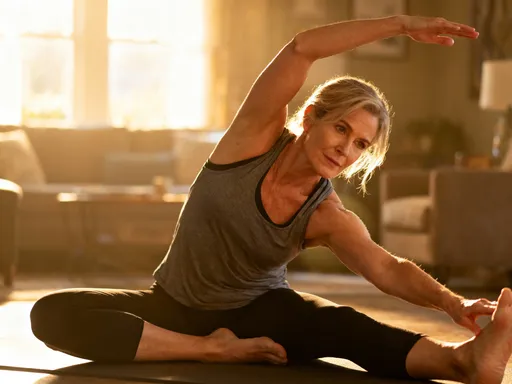
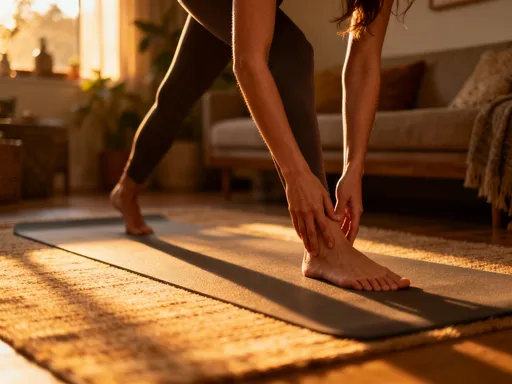
In the morning, a brief mobility flow can awaken the body and prepare it for the day. Begin seated on the edge of a chair or the floor with legs extended. Gently roll the shoulders forward and backward ten times to release overnight tension. Then, perform a seated spinal twist: place the right hand on the outside of the left knee and the left hand behind you, inhaling to lengthen the spine and exhaling to gently rotate to the left. Hold for 30 seconds, then switch sides. Follow with a gentle forward fold—hinge at the hips and reach hands toward the toes, keeping the back straight. This sequence warms up the spine, hips, and hamstrings without strain.
During the day, especially after long periods of sitting, a midday tension release can prevent stiffness from setting in. Stand up and take a wide step forward with the right foot into a gentle lunge, keeping the back straight and hands on the hips. Feel the stretch in the front of the left hip and hold for 30 seconds. Switch sides. Then, interlace the fingers and reach arms overhead, stretching side to side to open the rib cage and shoulders. Finish with neck circles—slowly lowering the right ear toward the shoulder, then rolling the chin down and to the left—moving with control to release tension in the neck and upper back.
In the evening, a relaxation-focused routine can ease the transition to rest. Lie on your back with knees bent and feet flat on the floor. Bring the right ankle over the left knee and gently pull the left thigh toward the chest, feeling a stretch in the right hip and glute. Hold for 30 seconds, then switch sides. Follow with a supine spinal twist: extend arms out to the sides in a T, bend the knees, and let them fall to the right while turning the head to the left. Hold for 30 seconds, then repeat on the other side. These movements calm the nervous system and support restful sleep.
Each of these routines can be adjusted based on comfort and ability. The key is to move slowly, breathe deeply, and avoid pushing into pain. Over time, even a few minutes a day can lead to noticeable improvements in ease of movement and overall comfort.
Building the Habit: Making Flexibility Part of Your Lifestyle
Starting a new routine is often easier than maintaining it. Life’s demands—family, work, household chores—can quickly push self-care to the bottom of the list. Yet the long-term benefits of flexibility depend not on occasional effort, but on consistent practice. The good news is that behavioral science offers practical strategies to help turn intention into habit.
One effective method is habit stacking—linking a new behavior to an existing one. For example, stretching for five minutes after brushing your teeth in the morning creates a natural cue and routine. Another approach is visual tracking: placing a calendar on the wall and marking each day you complete your routine provides a sense of accomplishment and continuity. Small rewards, like enjoying a favorite tea after an evening stretch, can also reinforce the behavior.
Setting micro-goals is another powerful tool. Instead of aiming to “become flexible,” focus on achievable targets like “stretch three times this week” or “hold each stretch for 30 seconds.” These small wins build confidence and momentum. If motivation wanes, reframing the practice as self-care rather than exercise can help. Stretching is not about burning calories or meeting fitness benchmarks—it’s about honoring your body’s need for movement and attention.
Time constraints are a common barrier, but even two minutes of stretching can make a difference. Keep a list of your top three stretches and do them while waiting for the kettle to boil or during a child’s homework time. The goal is not perfection, but presence. Over time, these small moments accumulate, creating a foundation of resilience that supports long-term health.
When to Seek Professional Guidance
While daily stretching is beneficial for most people, it’s important to recognize when stiffness may signal a need for professional evaluation. Sudden onset of tightness, especially if it occurs without changes in activity, could indicate an underlying condition such as inflammation, nerve compression, or joint degeneration. Pain during stretching—particularly sharp or radiating pain—should never be ignored, as it may suggest injury or structural issues.
Asymmetrical stiffness—such as one leg feeling significantly tighter than the other—can point to postural imbalances, scoliosis, or neurological concerns. Similarly, loss of function, like being unable to raise an arm overhead or walk without limping, warrants medical attention. These symptoms are not part of normal aging and should be assessed by a qualified healthcare provider.
Physical therapists, occupational therapists, and certified movement specialists can offer personalized assessments and safe stretching programs tailored to individual needs. They can identify movement restrictions, correct improper techniques, and recommend modifications for those with chronic conditions like arthritis or osteoporosis. Flexibility training should complement, not replace, professional care. When in doubt, seeking guidance ensures that self-care efforts support, rather than hinder, overall health.
Long-Term Gains: Flexibility as a Lifelong Investment
Flexibility is not a destination, but a lifelong practice—one that pays dividends in comfort, independence, and vitality. Women who prioritize movement and body awareness in midlife often find that they maintain better posture, experience fewer aches, and enjoy greater ease in daily activities as they age. The ability to bend, reach, twist, and move without restriction is not a luxury; it is a fundamental aspect of health and well-being.
Over time, regular stretching contributes to a more resilient body. Joints stay lubricated, muscles remain supple, and the nervous system becomes more adaptable. These changes reduce the risk of falls, improve balance, and support overall physical function. Beyond the physical benefits, the practice fosters a deeper connection between mind and body, encouraging mindfulness and stress reduction.
More than just a fitness habit, flexibility is a form of self-respect—a daily commitment to listening to your body and responding with care. It reflects an understanding that health is not just the absence of disease, but the presence of ease, strength, and mobility. By making flexibility a priority today, you invest in a future where movement remains a source of joy, not limitation. The journey begins not with grand gestures, but with small, consistent acts of attention—each stretch a quiet promise to stay strong, balanced, and whole for the years ahead.