Why Your Body Thanks You Later: The Quiet Power of Chinese Wellness Wisdom
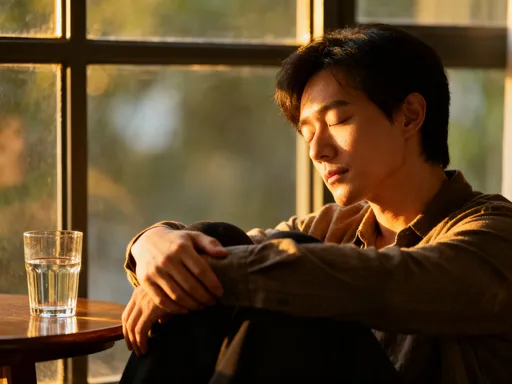
Have you ever felt tired no matter how much you sleep? Or noticed small health issues piling up over time? I did. That’s when I discovered Chinese body tuning—not as a quick fix, but as a way to stay ahead of illness. It’s not about fighting disease; it’s about building balance long before problems start. This is prevention rooted in centuries of observation, where small daily choices shape long-term vitality. Let me walk you through how this quiet, steady approach changed my relationship with health.
The Hidden Cost of Ignoring Early Imbalances
Many women in their 30s, 40s, and 50s carry a quiet burden: the sense that something is off, even when doctors say test results are normal. You might feel drained by mid-afternoon, struggle with bloating after meals, or wake up between 1 a.m. and 3 a.m. with a racing mind. In Western medicine, these are often labeled as stress or aging. But in traditional Chinese wellness, they are not noise—they are signals. They point to early imbalances in the body’s internal environment, long before disease takes root.
For centuries, Chinese practitioners have taught that the body speaks in whispers before it shouts. Fatigue, poor digestion, mood swings, irregular cycles, or even dry skin are not random inconveniences. They reflect disturbances in the flow of Qi (vital energy), shifts in Yin and Yang, or stagnation in organ systems. For example, waking repeatedly during the liver’s active time—between 1 a.m. and 3 a.m.—may suggest emotional tension or overwork affecting liver function. Similarly, persistent bloating after meals could signal a weakened Spleen Qi, responsible in Chinese medicine for transforming food into usable energy.
When these signs are ignored, small imbalances can evolve. A sluggish digestive system may lead to nutrient deficiencies. Chronic stress can erode adrenal reserves, contributing to long-term fatigue. Emotional suppression might manifest as physical tension or hormonal irregularities. The cost of dismissing these whispers is not immediate, but cumulative. Over time, the body loses its ability to self-regulate, making it more vulnerable to chronic conditions like metabolic syndrome, autoimmune issues, or burnout.
Chinese body tuning—often referred to as tiaoli—is built on the principle of early intervention. Rather than waiting for a diagnosis, it encourages awareness and gentle correction. This is not about chasing symptoms but restoring harmony. By recognizing fatigue as a call to rest, not a challenge to push through, or viewing digestion as a reflection of overall vitality, not just a mechanical process, women can take meaningful steps long before illness appears. The goal is not perfection, but presence: being attuned enough to notice when the system is drifting and knowing how to gently guide it back.
What Is Chinese Body Tuning—and Why It’s Different
Chinese body tuning is not a treatment for disease. It is a philosophy of maintenance. At its core is the belief that the body is an intelligent, interconnected network, where every system influences the others. Unlike conventional medicine, which often isolates symptoms and treats them locally, Chinese wellness looks at patterns. A headache is not just a problem in the head—it may stem from liver imbalance, digestive stagnation, or emotional stress. The approach is systemic, not fragmented.
The foundation of this system rests on three key concepts: Qi, Yin-Yang balance, and the organ networks. Qi is the vital force that animates all bodily functions—from breathing and digestion to thinking and healing. When Qi flows smoothly, the body functions with ease. When it becomes blocked or deficient, discomfort arises. Yin and Yang represent complementary forces: Yin is cooling, nourishing, and restorative; Yang is warming, active, and energizing. Health depends on their dynamic balance. Too much Yang may show as irritability or insomnia; too much Yin may appear as fatigue or fluid retention.
The organ networks in Chinese medicine differ from the anatomical organs of Western science. They are functional systems. For instance, the Spleen governs digestion and the distribution of nutrients, but also influences mental clarity and muscle strength. The Liver ensures the smooth flow of Qi and emotions—when it’s constrained, you might feel frustrated, tense, or experience menstrual discomfort. These systems do not operate in isolation. A weak Spleen can burden the Lungs, leading to frequent colds. A taxed Liver can affect the Stomach, causing acid reflux or appetite changes.
What makes Chinese body tuning different is its proactive nature. It does not wait for pathology to appear. Instead, it uses daily habits—how you eat, sleep, move, and manage emotions—to maintain equilibrium. A woman who feels sluggish in the morning might adjust her evening routine to support Liver detoxification. Another who struggles with dry skin in winter may add warming, moistening foods to nourish Yin. These are not dramatic interventions, but subtle shifts aligned with the body’s natural rhythms. The power lies in consistency, not intensity. Over time, these small acts of care build resilience, like strengthening a foundation before a storm.
The Science Behind Prevention: How Balance Supports Immunity
Modern science is beginning to validate what traditional systems have long understood: chronic imbalance weakens the body’s defenses. Research shows that prolonged stress, poor sleep, and irregular eating patterns can suppress immune function by increasing cortisol, disrupting circadian rhythms, and altering gut microbiota. These factors do not cause illness overnight, but they create a terrain where disease can take hold more easily.
Chinese wellness has always emphasized the importance of the Spleen and Stomach in immunity. In this framework, the Spleen extracts Qi from food and sends it upward to the Lungs, which then distribute protective energy (Wei Qi) across the body’s surface. This Wei Qi acts like a shield, guarding against external pathogens—what we commonly call colds, flu, or infections. When digestion is weak, this shield becomes thin. A woman who eats on the run, skips meals, or consumes too many raw, cold foods may unknowingly compromise her first line of defense.
Studies now confirm that gut health is central to immune function. The gut-associated lymphoid tissue (GALT) houses about 70% of the body’s immune cells. When digestion is impaired—due to stress, poor diet, or irregular eating—this system becomes less effective. Chinese dietary principles, such as eating warm, cooked meals and avoiding excessive cold foods, align with this understanding. Cooking breaks down food, making it easier to absorb and reducing strain on the digestive system. This allows the body to conserve energy for repair and protection.
Similarly, the connection between emotions and immunity is gaining recognition. Chronic anger or frustration—linked in Chinese medicine to Liver Qi stagnation—can lead to inflammation, a known contributor to many chronic diseases. Mind-body practices that promote emotional flow, such as mindful breathing or gentle movement, help regulate this system. By maintaining internal harmony, these practices support not only mental well-being but also physical resilience. Prevention, in this view, is not passive. It is an active cultivation of balance that strengthens the body’s innate ability to resist, adapt, and recover.
Daily Rhythms: Aligning with Nature’s Clock
One of the most powerful yet overlooked aspects of Chinese wellness is the concept of the 24-hour organ clock. This model maps the flow of Qi through the body’s organ systems in two-hour intervals throughout the day. Each organ has a peak time of activity, and aligning daily habits with these rhythms can enhance function and prevent imbalance.
For example, the Large Intestine is most active between 5 a.m. and 7 a.m.—a time traditionally associated with elimination. This is why many people feel the urge to use the bathroom upon waking. Supporting this process with hydration and gentle movement can promote regularity. From 7 a.m. to 9 a.m., the Stomach takes over, making this the ideal window for a nourishing breakfast. Skipping this meal may weaken digestive fire over time, leading to bloating or fatigue later in the day.
The Spleen functions strongly from 9 a.m. to 11 a.m., a period well-suited for focused work. This is when mental clarity and physical energy are naturally high. After noon, the Heart becomes active, overseeing circulation and emotional regulation. A light, mindful lunch supports this system, while overeating can lead to afternoon sluggishness. From 3 p.m. to 5 p.m., the Bladder is at its peak—this is an optimal time for physical activity or addressing tasks that require endurance.
Evening hours are equally important. The Kidneys, responsible for energy storage and hormonal balance, are most active from 5 p.m. to 7 p.m. This is a good time to wind down and avoid overstimulation. The Pericardium (a protective layer around the heart) governs 7 p.m. to 9 p.m., making it ideal for connection—spending time with family, sharing a meal, or engaging in calming activities. From 9 p.m. to 11 p.m., the Triple Burner regulates fluid balance and prepares the body for rest. This is a crucial window for transitioning into sleep. Finally, the Gallbladder (linked to decision-making) and Liver (responsible for detoxification) are most active from 11 p.m. to 3 a.m.—a period when deep rest is essential.
By aligning daily routines with these rhythms, women can support their body’s natural cycles rather than working against them. Eating a heavy meal at 9 p.m. disrupts the Triple Burner and may interfere with Liver detoxification. Staying up past 11 p.m. depletes Kidney energy, which can affect vitality and hormonal health over time. Simple adjustments—like finishing dinner by 7 p.m., turning off screens by 9 p.m., and aiming to be asleep by 10:30 p.m.—can have profound effects on long-term well-being.
Food as Quiet Medicine: Eating for Balance, Not Just Nutrition
In Chinese wellness, food is more than fuel. It carries energetic properties that influence the body’s internal climate. Every food has a thermal nature—warming, cooling, or neutral—and a flavor profile—sweet, sour, bitter, pungent, or salty—each affecting the organs in specific ways. Understanding these qualities allows women to eat in a way that supports balance, not just satisfies hunger.
For instance, warming foods like ginger, cinnamon, cooked grains, and root vegetables help strengthen Spleen and Stomach Qi, making them ideal for those who feel cold easily, have slow digestion, or experience fatigue. Cooling foods—such as cucumber, watermelon, or raw salads—can soothe excess heat, beneficial for someone with inflammation, redness, or irritability. However, excessive consumption of raw or cold foods can weaken digestion over time, especially in colder seasons or for those with a naturally cool constitution.
Flavors also play a role. Sweet foods (like pumpkin, sweet potato, or dates) nourish the Spleen and build Qi, but too much can lead to dampness—seen as bloating, sluggishness, or weight gain. Sour flavors (like lemon or vinegar) help收敛 (converge) energy, useful for those who feel scattered or have excessive sweating. Bitter foods (like dandelion greens or bitter melon) clear heat and support the Heart. Pungent flavors (like garlic, onion, or radish) promote circulation and help move stagnant Qi. Salty foods (like miso or seaweed) soften hardness and support the Kidneys, but in excess can deplete them.
Seasonal eating is another key principle. In winter, when the body needs to conserve energy, warming, nourishing foods like stews, soups, and roasted vegetables are recommended. In summer, cooling foods help the body release heat. A woman experiencing hot flashes during perimenopause might benefit from increasing cooling foods while reducing spicy or warming ones. Similarly, someone with low energy in the fall—when Lung energy is dominant—can support respiratory and immune health with moistening foods like pears, honey, and sesame.
This approach does not require strict rules or elimination diets. It invites awareness. Instead of asking, “How many calories is this?” you begin to ask, “How does this make my body feel?” A warm bowl of oatmeal with cinnamon in the morning may leave you steady and focused, while a cold smoothie might cause bloating or a crash. By tuning into these subtle responses, food becomes a tool for daily adjustment, a quiet form of medicine that prevents imbalance before it takes hold.
Simple Practices That Make a Difference
One of the greatest strengths of Chinese body tuning is its accessibility. You do not need special equipment, hours of free time, or expensive treatments. The most effective practices are simple, gentle, and can be woven into a busy day. They work not through intensity, but through consistency.
Mindful breathing is a cornerstone. Taking just five minutes in the morning or before bed to focus on slow, deep breaths activates the parasympathetic nervous system, calming the mind and supporting Liver Qi flow. A simple practice: inhale for four counts, hold for four, exhale for six. This ratio encourages relaxation and helps regulate stress hormones.
Self-massage along energy pathways—known as meridians—can also be done at home. Gently rubbing the inside of the lower leg, where the Spleen meridian runs, can support digestion. Massaging the space between the eyebrows (the Yintang point) helps calm the mind. Tapping along the outer seam of the pants (the Gallbladder meridian) can relieve tension and improve circulation. These small acts take minutes but send signals of care to the body.
Gentle movement is equally important. Tai Chi, Qigong, or even slow stretching help maintain the flow of Qi and prevent stagnation. Unlike high-intensity workouts, which can deplete Qi if overdone, these practices nourish energy. Ten minutes of morning stretches or a short Qigong routine can set a calm, centered tone for the day.
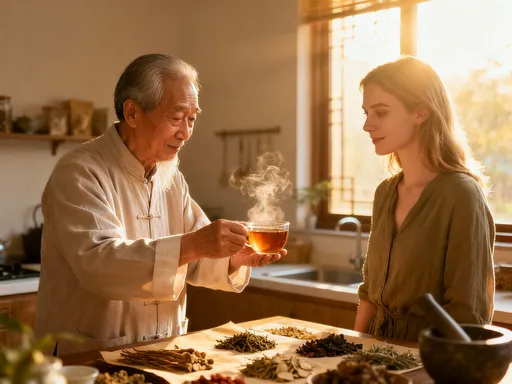
Herbal teas, used traditionally for support, offer another gentle tool. Peppermint tea can soothe a tense Liver. Chrysanthemum tea helps clear heat and supports eye health. Dried longan or red date tea nourishes the Heart and Blood, beneficial for those with poor sleep or fatigue. These are not cures, but supportive allies when used appropriately.
The key is integration. Rather than adding one more task to an already full schedule, these practices can be embedded into existing routines—breathing while waiting for the kettle, massaging the feet while watching TV, sipping tea after dinner. Over time, they become natural expressions of self-care, not burdens.
Building Your Own Prevention Plan
There is no single right way to practice Chinese body tuning. What works for one woman may not suit another. The goal is not to follow a rigid system, but to develop awareness and respond with kindness. Prevention is personal.
Start by observing your patterns. When do you feel most alert? When do you crash? How does your digestion respond to different foods? What time do you naturally wake or feel sleepy? These observations are clues. If you feel foggy after lunch, perhaps your Spleen Qi needs support—try eating a warm, cooked meal and chewing thoroughly. If you wake at 2 a.m. feeling anxious, your Liver may be overtaxed—consider reducing screen time at night and practicing evening breathing.
Choose one small change to begin. It could be drinking warm water with lemon in the morning, eating dinner earlier, or taking five deep breaths before bed. Make it manageable. Success builds momentum. Once a habit is established, add another. Over months, these small acts accumulate into a resilient foundation.
Remember, this is not about perfection. Some days will be out of balance—and that’s okay. The practice is in returning, not in never straying. The woman who eats a late meal one night can still support her body by resting early the next day. The one who skips stretching can return to it the next morning without guilt.
Finally, while self-care is powerful, it does not replace professional care. If symptoms persist or worsen, consulting a qualified healthcare provider is essential. Chinese body tuning complements medical treatment; it does not substitute for it. Working with a licensed practitioner of Traditional Chinese Medicine can provide personalized guidance, especially for deeper imbalances.
Conclusion
True health isn’t the absence of disease—it’s the presence of balance. Chinese body tuning doesn’t promise miracles, but it delivers something more valuable: the quiet strength that comes from daily care. By listening early and acting gently, we don’t just avoid illness—we cultivate a life of steady energy, clarity, and resilience. The best time to start was years ago. The second-best time? Right now.